
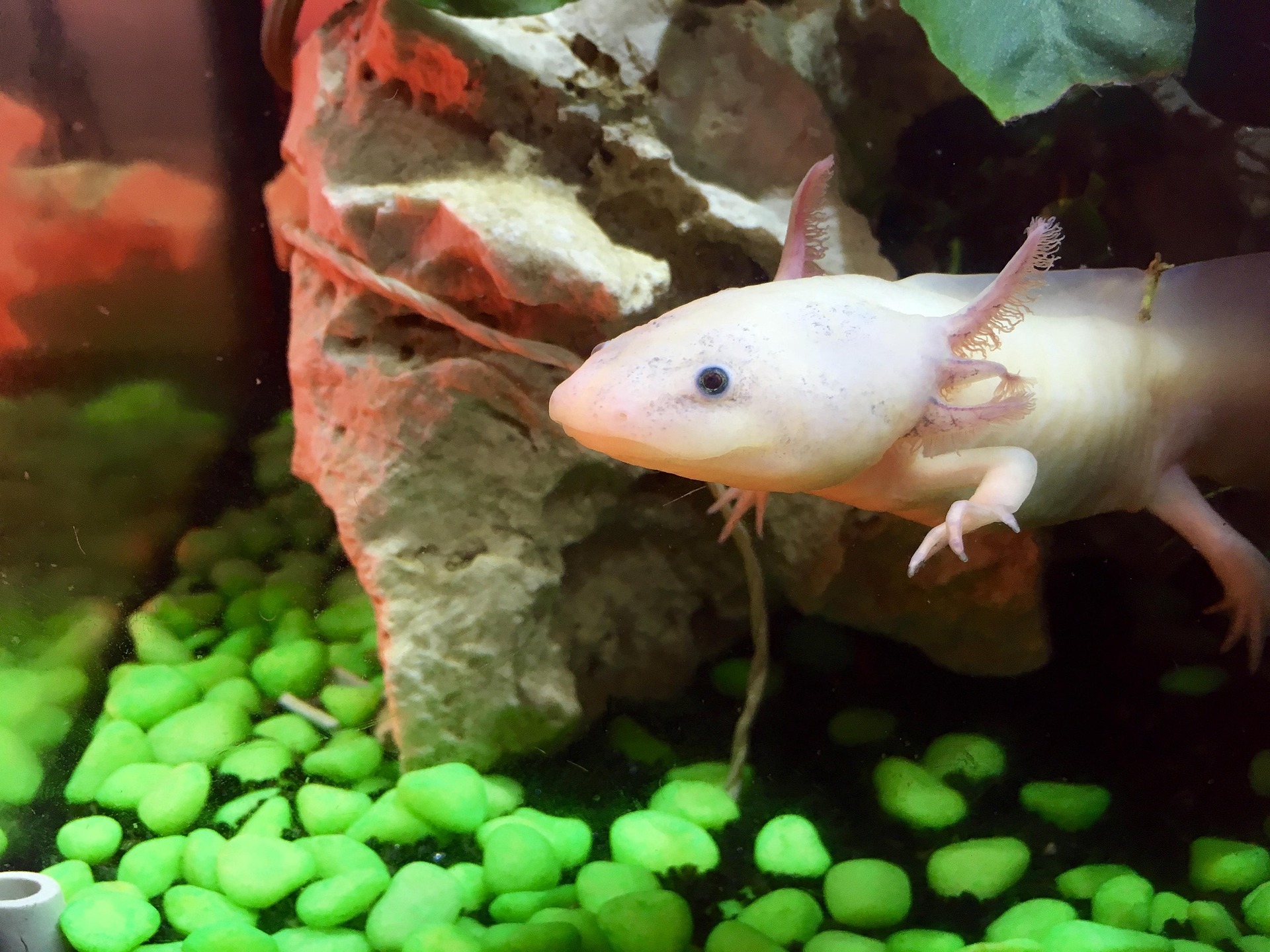
If you have spent any time scrolling reptile and amphibian content on social media, you have almost certainly seen an axolotl. These pink, feathery-gilled creatures have become internet celebrities, racking up billions of views on TikTok and driving a surge of interest in amphibian keeping. But here is a question that confuses more people than you might expect: is an axolotl a salamander?
The short answer is yes, technically. The longer answer reveals one of the most fascinating stories in amphibian biology, a tale of evolution frozen in time, a species on the brink of extinction in the wild, and a pet trade phenomenon that shows no signs of slowing down.
Yes, an Axolotl Is a Salamander — Sort Of
The axolotl (Ambystoma mexicanum) belongs to the order Caudata, which includes all salamanders and newts. So taxonomically, an axolotl is indeed a salamander. It belongs to the same genus (Ambystoma) as the tiger salamander, one of the most common salamanders in North America.
But the axolotl breaks the most fundamental rule of salamander biology: it never grows up. While virtually all other salamanders undergo metamorphosis, transforming from aquatic larvae with gills into terrestrial adults with lungs, the axolotl retains its larval features for its entire life. This phenomenon is called neoteny or paedomorphosis, and it is the single most important thing that separates axolotls from typical salamanders.
An adult axolotl keeps its feathery external gills, its flattened tail fin, and its fully aquatic lifestyle. It never develops lungs, never leaves the water, and never undergoes the dramatic physical transformation that defines most salamander species. According to research published in Nature, this permanent larval state is controlled by differences in thyroid hormone signaling, the same hormones that trigger metamorphosis in other amphibians simply do not activate in axolotls under normal conditions.
Key Differences Between Axolotls and Typical Salamanders
Habitat
Axolotls are fully aquatic for their entire lives. They breathe through their external gills and skin and cannot survive out of water. Typical salamanders, after metamorphosis, are terrestrial or semi-terrestrial, living under logs, in leaf litter, or near streams. Some species like the Eastern Red-backed Salamander spend their entire adult lives on land.
Appearance
The most obvious visual difference is the gills. Axolotls retain three pairs of feathery external gills that branch out from behind their heads, giving them their distinctive alien-like appearance. Metamorphosed salamanders lose their gills entirely and develop smooth skin adapted for terrestrial life.
Axolotls also keep their larval tail fin, a broad, flat structure that runs along their back and tail. Adult salamanders have rounded, muscular tails without this fin.
Regeneration
While many salamanders can regenerate lost tails and some limbs, axolotls are the regeneration champions of the vertebrate world. They can regrow entire limbs, portions of their heart, spinal cord, and even parts of their brain with no scarring. A 2018 study in Science sequenced the axolotl genome, the largest genome ever sequenced at 32 billion base pairs, and identified key genes responsible for this extraordinary regenerative ability. This research has made axolotls one of the most important model organisms in biomedical science, with direct implications for human wound healing and organ regeneration.
The Axolotl’s Wild Crisis
Here is the tragic irony of the axolotl’s popularity: while millions thrive in captivity, the species is critically endangered in the wild. Axolotls are native to only one place on Earth, the lake system of Xochimilco in Mexico City. Urbanization, pollution, and the introduction of invasive species like tilapia and carp have devastated their habitat.
A survey cited by the IUCN found axolotl population density in Xochimilco’s canals had declined catastrophically, with recent estimates suggesting fewer than 1,000 individuals may remain in the wild. The IUCN lists the axolotl as Critically Endangered, the highest threat category before extinction.
Conservation efforts are ongoing. Local communities in Xochimilco are working to restore the traditional chinampa farming system, floating agricultural islands that create habitat favorable to axolotls. Captive breeding programs in Mexico and internationally serve as a genetic safety net. But the wild population remains in serious jeopardy.
Which Makes a Better Pet?
Both axolotls and terrestrial salamanders can make rewarding pets, but they require fundamentally different setups and appeal to different types of keepers.
Axolotls as Pets
Axolotls need a fully aquatic setup: a 20-gallon or larger aquarium with cool, clean water maintained between 60 and 68 degrees Fahrenheit. They are sensitive to warm water, and temperatures above 72 degrees can cause stress and disease. A good filtration system with gentle flow is essential, as axolotls produce significant waste but dislike strong currents.
They eat earthworms, bloodworms, and sinking pellets. They are engaging to watch, with distinct personalities, and their regenerative abilities mean minor injuries heal remarkably quickly. With reptile and amphibian ownership surging 47 percent since 2020 and Gen Z making up 33 percent of exotic pet owners, axolotls have become one of the hottest species in the hobby.
Axolotls can live 10 to 15 years in captivity with proper care. They come in several color morphs including wild-type (dark), leucistic (pink with dark eyes), albino (golden with red eyes), and melanoid (solid dark).
Terrestrial Salamanders as Pets
Species like the tiger salamander or fire salamander need a terrestrial or semi-aquatic vivarium with moist substrate, hiding spots, and a shallow water dish. They prefer cooler temperatures and need high humidity. Their diet consists of insects like crickets, earthworms, and waxworms.
Terrestrial salamanders are generally lower-maintenance than axolotls because they do not require a full aquatic filtration setup. However, they are more secretive, spending much of their time hidden under cover. If you want a pet you can watch actively swimming and interacting with its environment, the axolotl wins. If you prefer a low-key, terrestrial setup with minimal equipment, a land salamander may be the better choice.
Legal Considerations
Before purchasing either species, check your local and state laws. Axolotls are illegal to own in California, Maine, New Jersey, and Virginia, as well as in Washington, D.C. Some states require permits. These restrictions exist because releasing non-native amphibians could harm local ecosystems, particularly where native Ambystoma species could hybridize with escaped axolotls.
Most native salamanders are also protected by state wildlife laws, making it illegal to collect them from the wild. Always purchase captive-bred animals from reputable breeders.
The Bottom Line
Axolotls and salamanders are closely related, but they live fundamentally different lives. The axolotl’s refusal to grow up, its extraordinary regeneration, and its tragic wild status make it one of the most scientifically important and culturally fascinating amphibians alive. As a pet, it offers an interactive, visually striking experience that few other amphibians can match.
For more on the world of amphibians and herping, explore our articles on the red-eyed tree frog and poison dart frogs. And if you are just getting started in the hobby, our Herping 101 guide covers the basics of finding and observing reptiles and amphibians in the wild.
0 Comments