
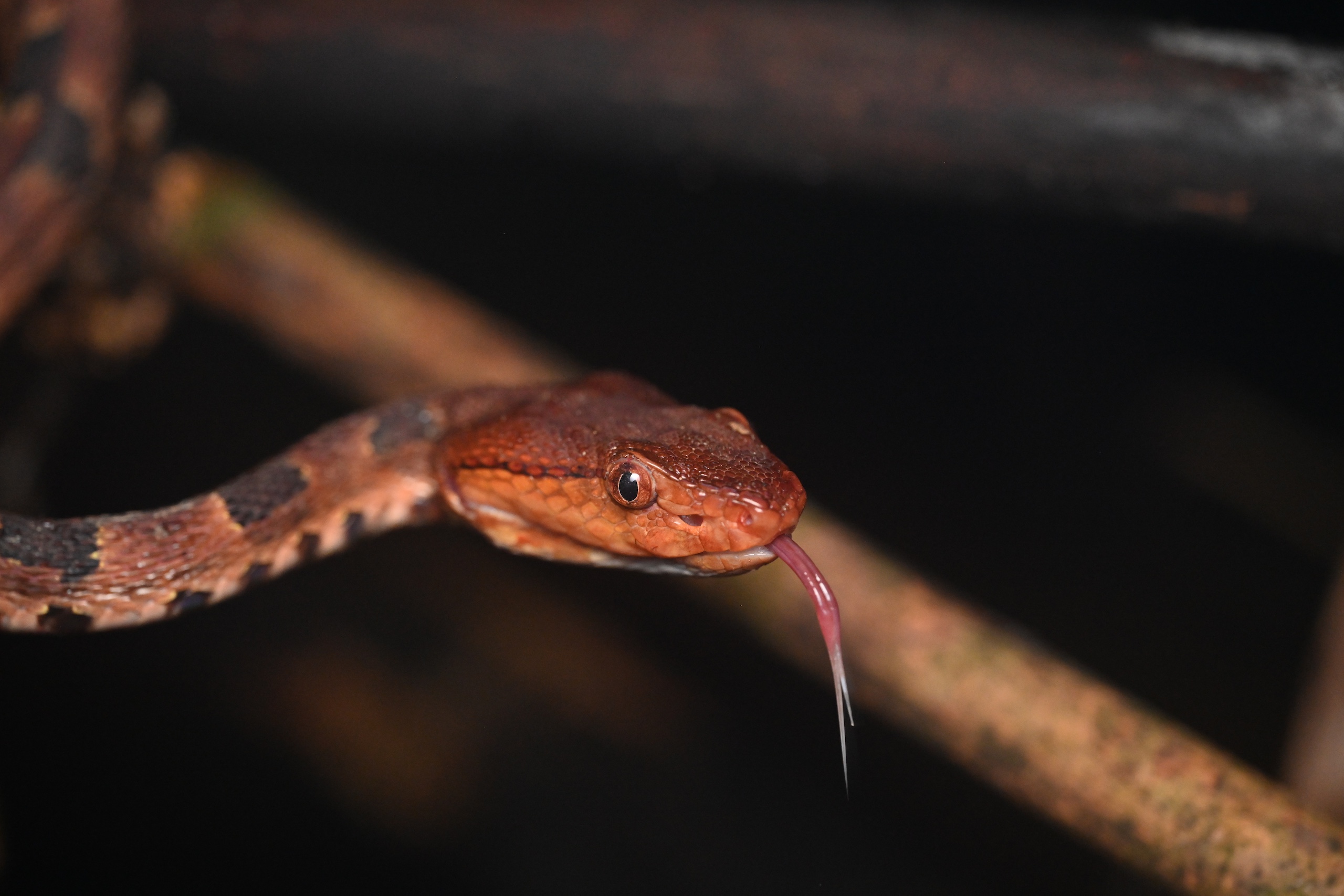
If you’re into herping, the brown spotted pit viper (Protobothrops mucrosquamatus) is one of those snakes you don’t forget once you see it. Not because it’s flashy, but because it blends in way too well. This is the kind of snake you can walk right past without ever realizing it was there, which is part of what makes it both cool and dangerous.
What It Looks Like
This species is usually between 2–4 feet long and has a brown or tan body covered in darker spots. The pattern helps it disappear into leaves, dirt, and forest floors. Even experienced herpers can miss one if they’re not paying close attention.
Its scales are rough (keeled), which adds to the camouflage. Up close, it’s actually a really good-looking snake, but you usually notice it after your heart skips a beat.
Where It Lives
The brown spotted pit viper is found in places like Taiwan, southern China, and parts of Vietnam. It lives in forests, grassy areas, farmland, and sometimes near trails or rural roads. Basically, it’s comfortable in a lot of environments, which is why people run into it fairly often.
If you’re out hiking or night walking in these areas, especially during warm or humid weather, this is a species to keep in mind.
How It Acts
Despite the scary reputation, this snake isn’t aggressive by nature. Most of the time it just stays still and hopes you don’t notice it. The problem is that its camouflage works so well that people accidentally step too close, or on it.
When it feels threatened, it can strike fast. Its venom is medically serious, so any bite should be treated as an emergency. This isn’t a snake to mess with or try to handle.
What It Eats
The brown spotted pit viper mainly eats small mammals, frogs, lizards, and sometimes birds. Like other pit vipers, it has heat-sensing pits that help it hunt, especially at night. It waits quietly until prey gets close, strikes, and lets the venom do the rest.
Seeing one hunting during field herping (from a safe distance) is honestly impressive, it’s a reminder of how patient and efficient these animals are.
Why It’s Important
Even though people are often scared of it, this species plays an important role in controlling rodent populations. That actually helps farmers and keeps ecosystems balanced.
For herpers, spotting one safely is a reminder of why awareness matters. Watching where you step, slowing down, and respecting wildlife can make all the difference.
Final Thoughts
The brown spotted pit viper doesn’t rely on bright colors or dramatic behavior to stand out. It survives by staying hidden, staying patient, and only reacting when it absolutely has to. That’s part of what makes it such a respected species among experienced herpers.
If you’re lucky enough to see one, take it as a reminder to slow down and stay aware of your surroundings. Give it space, watch from a safe distance, and appreciate how perfectly it fits into its environment. Moments like that are what make field herping so memorable, and why respect for the animals always comes first.
0 Comments